
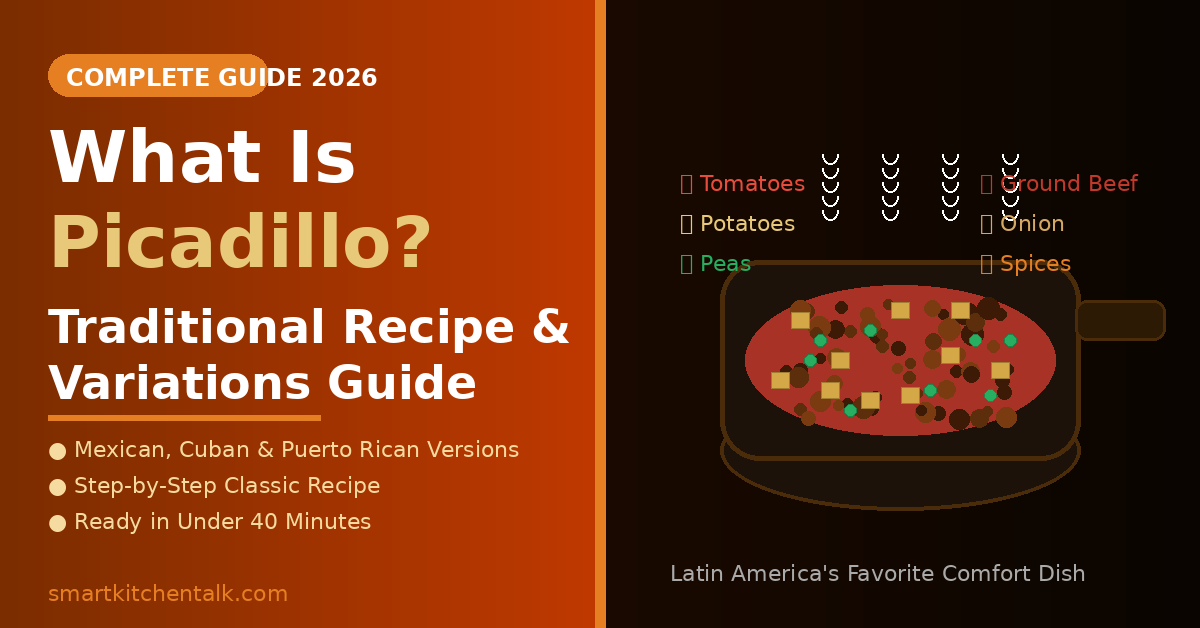
Picadillo is one of Latin America’s most beloved comfort dishes — a savory, hearty skillet meal of ground beef, potatoes, tomatoes, and spices ready in under 40 minutes. In this complete guide, you’ll learn what picadillo is, its rich culinary history, how it varies across countries, a step-by-step classic recipe, and tips to make it your own.
📋 Table of Contents
- What Is Picadillo?
- History & Origins of Picadillo
- Picadillo Variations by Country
- Key Ingredients Explained
- Classic Mexican Picadillo Recipe (Step-by-Step)
- Cuban Picadillo Recipe
- How to Serve Picadillo
- Pro Tips for Perfect Picadillo
- Storage & Reheating
- Frequently Asked Questions
- Final Thoughts
What Is Picadillo?
Picadillo (pronounced pee-kah-DEE-yoh) is a traditional Latin American dish made from ground or minced meat — most commonly beef — cooked down with tomatoes, onions, garlic, and spices into a rich, savory skillet hash. The word itself comes from the Spanish verb picar, meaning “to mince” or “to chop,” which perfectly describes how the dish is prepared.
At its core, picadillo is simple, affordable, and endlessly versatile. Depending on the country or even the family making it, you might find it made with potatoes and carrots, sweet raisins and briny olives, or bold chili peppers and fresh herbs. It is the kind of dish that every grandmother has her own version of, and that is precisely what makes it so special.
Despite its humble ingredients, picadillo punches well above its weight in flavor. The ground meat absorbs the aromatics and tomato sauce as it simmers, producing a deeply savory result that tastes far more complex than the effort required to make it. Most versions are on the table in 30 to 40 minutes, making it a perfect weeknight dinner staple.
🍽️ Quick Fact
Picadillo is consumed across Mexico, Cuba, Puerto Rico, the Philippines, Spain, and several other Latin American countries — each with its own distinct twist. It is often described as one of the most universally loved comfort foods in the Spanish-speaking world.
History & Origins of Picadillo
Picadillo has roots in Spanish colonial cuisine, brought to Latin America by Spanish settlers who adapted their Old World cooking techniques to New World ingredients. The Spanish were already familiar with minced meat dishes, and as they settled across the Americas and the Philippines, the base concept evolved dramatically based on local produce, spices, and culinary traditions.
In Mexico, the dish likely developed as a way to stretch small amounts of meat into a filling family meal by combining it with affordable staples like potatoes, carrots, and tomatoes. In Cuba and Puerto Rico, the Spanish influence blended with African and Caribbean food traditions, introducing ingredients like olives, capers, and raisins — sweet-savory combinations that became hallmarks of those island versions.
The Philippines, which was a Spanish colony for over 300 years, also developed its own giniling (ground meat) dishes with clear picadillo DNA, often featuring raisins, potatoes, and tomatoes in a similarly comforting format.
Today, picadillo remains one of the most cooked dishes in Latin American home kitchens. It is inexpensive, quick, and made entirely from pantry staples — a dish born of necessity that became a cultural treasure.
Picadillo Variations by Country
One of the most fascinating aspects of picadillo is how dramatically it changes from one country to the next. Below is a breakdown of the most well-known regional styles.
| Country / Region | Signature Ingredients | Flavor Profile | Typical Serving Style |
|---|---|---|---|
| Mexico | Potatoes, carrots, tomatoes, cumin, jalapeño | Savory, mildly spicy, earthy | With rice, tacos, or tortillas |
| Cuba | Green olives, raisins, capers, wine | Sweet-savory, briny, rich | Over white rice (arroz blanco) |
| Puerto Rico | Sofrito, sazón, adobo, olives, raisins | Bold, tangy, slightly sweet | Over rice, in empanadas |
| Philippines | Potatoes, raisins, bell pepper, soy sauce | Sweet, savory, slightly soy-forward | Over steamed white rice |
| Spain | Almonds, pine nuts, raisins, sherry | Nutty, sweet-savory, wine-infused | As empanada filling or tapa |
| Costa Rica / El Salvador | Chayote, potatoes, minimal spice | Mild, vegetal, simple | With gallo pinto or tortillas |
Mexican vs. Cuban Picadillo: The Biggest Difference
If you have heard of picadillo but only know one version, it is likely either the Mexican or Cuban style — and the two could not be more different. Mexican picadillo is savory and earthy, built on tomatoes, potatoes, and warm spices like cumin. Cuban picadillo is sweet-savory and tangy, distinguished by green olives and raisins simmered together, creating an unlikely but absolutely delicious combination. Both are wonderful, and knowing the difference helps you choose the right one for your meal.
Key Ingredients Explained
Understanding the role of each ingredient in picadillo helps you make smarter substitutions and build better flavor. Here is what each major component brings to the dish:
🥩
Ground Beef
The protein base. An 80/20 blend provides richness and flavor. Leaner 90/10 works for a lighter result. Ground turkey, chicken, or pork are common substitutes.
🍅
Tomatoes / Tomato Sauce
Forms the braising liquid and adds acidity. Fresh Roma tomatoes blended smooth, canned tomato sauce, or diced tomatoes all work. Tomato paste adds deeper, concentrated flavor.
🥔
Potatoes
A signature ingredient in Mexican-style picadillo. They absorb the tomato-spice sauce beautifully. Russet potatoes hold their shape well. Sweet potatoes offer an interesting twist.
🧅
Onion & Garlic
The aromatic backbone of every picadillo version. White or yellow onions are most traditional. These are sautéed first to build the flavor foundation.
🌶️
Peppers & Chiles
Bell peppers add sweetness; jalapeños, serranos, or poblanos add heat. Mexican versions often use blended dried chiles like ancho or guajillo for deep, smoky flavor.
🫒
Olives & Raisins
Used in Cuban and Puerto Rican versions. Green olives provide brine and salt; raisins add a gentle sweetness that balances the acidity of the tomatoes. The combo sounds odd — it works brilliantly.
🧂
Spices
Cumin, oregano, and cinnamon are most common. Cumin adds earthiness, oregano adds herbal depth, and a touch of cinnamon (especially in Mexican and Spanish versions) gives a warm, aromatic complexity.
🫛
Vegetables
Carrots, peas, and green beans are commonly added for texture and nutrition. These cook down in the sauce alongside the meat and potatoes.
Classic Mexican Picadillo Recipe (Step-by-Step)
This is the foundational Mexican-style picadillo — savory, hearty, and ready in about 35 minutes. It is the ideal starting point whether you are making picadillo for the first time or looking for a reliable base recipe to customize.
Prep Time
10 min
Cook Time
25 min
Total Time
35 min
Servings
4–6 people
Cuisine
Mexican
Ingredients
For the Tomato Sauce Base:
- 3 medium Roma tomatoes (or 1 can / 15 oz tomato sauce)
- ½ white onion, roughly chopped (for blending)
- 2 cloves garlic
- 1 jalapeño pepper (remove seeds for mild heat)
- ½ cup water or beef broth
- ½ tsp Mexican oregano
- ½ tsp ground cumin
- Salt to taste
For the Picadillo:
- 1 lb (450g) ground beef (80/20 recommended)
- ½ white onion, finely diced
- 1 tbsp vegetable or olive oil
- 2 medium Russet potatoes, peeled and diced into ½-inch cubes
- 1 medium carrot, peeled and diced (optional)
- ½ cup frozen peas (added at end, optional)
- Salt and pepper to taste
Step-by-Step Instructions
1
Blend the Tomato Sauce
Add the tomatoes, ½ onion, garlic, jalapeño, water, oregano, cumin, and a pinch of salt to a blender. Blend until completely smooth. Set aside. If using canned tomato sauce, simply season it with the spices and skip blending.
2
Sauté the Aromatics
Heat oil in a large skillet or sauté pan over medium-high heat. Add the remaining diced onion and cook for 4–5 minutes, stirring occasionally, until softened and translucent.
3
Brown the Ground Beef
Add the ground beef to the pan. Season with salt and pepper. Cook over medium-high heat for 6–8 minutes, breaking up the meat with a wooden spoon into small crumbles. Drain excess fat if desired, then return to heat.
4
Add Potatoes & Carrots
Add the diced potatoes (and carrots if using) to the pan. Stir and cook together with the beef for about 4–5 minutes. This step starts cooking the vegetables and allows them to absorb the beefy flavors in the pan.
5
Pour in the Tomato Sauce & Simmer
Pour the blended tomato sauce over the beef and potatoes. Stir everything together. Cover the pan with a lid and simmer on medium heat for 10 minutes. The steam will help cook the potatoes through.
6
Finish & Add Peas
Remove the lid and continue simmering for another 5 minutes until the sauce thickens and the potatoes are fully tender when poked with a fork. Stir in frozen peas if using and cook for 2 more minutes. Taste and adjust salt as needed.
7
Serve & Enjoy
Serve hot over white rice, with warm corn or flour tortillas on the side, or use as a taco or empanada filling. Garnish with fresh cilantro, a squeeze of lime, and sliced avocado if desired.
Cuban Picadillo Recipe
Cuban picadillo is one of the most iconic versions of this dish. The combination of green olives and golden raisins alongside seasoned ground beef and tomatoes might sound unusual, but the briny, sweet, savory flavors create something genuinely extraordinary. This is the version you will find in Cuban-American homes across Florida and New York.
Cuban Picadillo Ingredients:
- 1 lb ground beef
- 1 small white onion, finely diced
- 4 cloves garlic, minced
- 1 green bell pepper, diced
- 1 can (15 oz) crushed tomatoes or tomato sauce
- ¼ cup dry white wine (optional but traditional)
- ⅓ cup Spanish green olives, sliced
- ¼ cup golden raisins
- 1 tsp ground cumin
- 1 tsp oregano
- 2 bay leaves
- Salt and black pepper to taste
- 2 tbsp olive oil
Method: Sauté onion, garlic, and bell pepper in olive oil until soft, about 5 minutes. Add ground beef and cook until browned, breaking it up as you go. Drain excess fat. Add wine if using and cook for 1 minute. Add crushed tomatoes, cumin, oregano, bay leaves, olives, and raisins. Stir to combine. Simmer uncovered for 15–20 minutes until the sauce thickens. Remove bay leaves, taste for seasoning, and serve over white rice.
How to Serve Picadillo
Picadillo is one of the most versatile dishes in Latin cooking. Here are the most popular ways to serve and use it:
🍚 Over White Rice
The most classic presentation. The rice soaks up the tomato sauce and every bite is complete. Arroz blanco is the traditional Cuban pairing.
🌮 In Tacos or Tortillas
Spoon picadillo into warm corn or flour tortillas. Top with queso fresco, sour cream, salsa, and fresh cilantro for a quick weeknight taco night.
🥟 Empanada Filling
Picadillo is the most traditional filling for Latin empanadas. Stuff it into pastry dough, seal the edges, and bake or fry until golden.
🫑 Stuffed Peppers
Hollow out bell peppers, fill with picadillo, top with cheese, and bake at 375°F for 25 minutes for a complete, elegant dinner.
🌽 Over Nachos
Spoon picadillo over tortilla chips and top with shredded cheese, jalapeños, and sour cream for an instant crowd-pleasing appetizer.
🥚 Breakfast Burritos
Mix leftover picadillo with scrambled eggs and wrap in a flour tortilla. An incredibly satisfying morning meal that uses up leftovers brilliantly.
Pro Tips for Perfect Picadillo
- Do not skip the salt. Salt in the tomato sauce and on the beef draws out moisture and binds all the flavors together. Season in layers — at the beef stage and again at the sauce stage.
- Cut potatoes evenly. Uniform ½-inch dice ensures every piece cooks at the same rate. Unevenly cut potatoes result in some mushy and some undercooked.
- Use 80/20 beef for the best flavor. The fat renders into the sauce, adding richness. If using leaner beef, add a tablespoon of olive oil to compensate.
- Taste your jalapeño first. Heat levels vary wildly. A small taste before adding to the blender lets you gauge how spicy the final dish will be.
- Let it simmer uncovered at the end. This thickens the sauce. If it dries out before the potatoes are tender, add ¼ cup of water or broth and continue cooking.
- Picadillo tastes better the next day. Like most braised dishes, the flavors deepen overnight. Make a big batch and use leftovers creatively all week.
- Add the raisins early in Cuban picadillo. Giving them time to plump and dissolve slightly into the sauce creates a deeper, sweeter background note rather than noticeable bites of fruit.
Storage & Reheating
| Method | Duration | Best Practice |
|---|---|---|
| Refrigerator | Up to 5 days | Store in an airtight container. Cool completely before sealing. |
| Freezer | Up to 3 months | Freeze in portion-sized containers or bags. Label with date. |
| Reheating | — | Reheat in a skillet over medium heat, adding a splash of water or broth if it has dried out. Microwave works too — reheat in 90-second intervals, stirring between. |
Frequently Asked Questions
What does picadillo mean in English?
The word “picadillo” comes from the Spanish verb picar, meaning “to mince” or “to chop.” In English, it loosely translates to “minced” or “hash.” The dish is essentially a minced meat hash cooked in a tomato-based sauce. Is picadillo Mexican or Cuban?
Picadillo exists in both cuisines but with distinct differences. Mexican picadillo is typically made with potatoes, carrots, and warm spices with a tomato base. Cuban picadillo is defined by the addition of green olives and raisins, giving it a sweet-savory-briny flavor. Both are traditional and delicious — they just reflect different cultural influences. Can I make picadillo without potatoes?
Yes. Potatoes are a classic Mexican-style addition but are not universal across all versions. Cuban-style picadillo does not traditionally include potatoes. You can omit them entirely, or substitute with sweet potatoes, butternut squash, chayote, or extra vegetables like zucchini and green beans. What meat can I use instead of ground beef?
Ground turkey or chicken are the most popular lighter substitutions and work extremely well. Ground pork adds richness. A blend of beef and pork is traditional in some Spanish and Filipino versions. For a vegetarian picadillo, seasoned lentils or plant-based ground meat (like Impossible or Beyond) are excellent alternatives. Is picadillo spicy?
Traditional picadillo is mildly seasoned but not inherently spicy. The heat level is entirely customizable. Add a jalapeño or serrano for mild heat, or include ancho or guajillo chili peppers for deeper, smokier heat. Cuban picadillo contains no hot peppers and is not spicy at all. Why does Cuban picadillo have raisins?
The addition of raisins to savory meat dishes has roots in Moorish and Andalusian Spanish cuisine, where sweet and savory flavors were commonly combined. This tradition traveled with Spanish colonizers to Cuba, where it became embedded in the local food culture. The sweetness of the raisins balances the acidity of the tomatoes and the brininess of the olives, creating a complex, well-rounded flavor. Can I meal prep picadillo in advance?
Absolutely — picadillo is an ideal meal prep dish. It actually improves in flavor after a day in the refrigerator as the spices deepen. Make a full batch on Sunday, refrigerate it, and use it throughout the week in tacos, over rice, in eggs, or as an empanada filling. It freezes beautifully for up to 3 months.
Final Thoughts
Picadillo is one of those dishes that proves the most comforting food does not require expensive ingredients or complicated technique. Whether you make the classic Mexican version with potatoes and tomato sauce or venture into the sweet-briny world of Cuban picadillo with olives and raisins, you are participating in a culinary tradition that spans centuries and crosses borders.
What makes picadillo truly special is its adaptability. Every cook brings something different to the pan — a grandmother’s cinnamon stick, a chipotle pepper for smoke, a handful of raisins for sweetness, or a squeeze of lime at the end. There is no single “correct” picadillo. The only rule is that it should taste deeply satisfying.
Try the classic Mexican recipe first, then explore the Cuban version, and eventually build your own family variation. That is exactly how this dish has survived and thrived for hundreds of years.
🔑 Key Takeaways
- Picadillo means “minced” in Spanish and is a Latin American ground beef dish with many regional variations.
- Mexican picadillo features potatoes, tomatoes, and warm spices; Cuban picadillo adds green olives and raisins for a sweet-savory profile.
- It takes under 40 minutes and uses budget-friendly pantry staples.
- Picadillo can be served over rice, in tacos, stuffed into peppers, or used as an empanada filling.
- Leftovers keep for 5 days in the fridge and freeze well for up to 3 months.
- The dish is highly customizable — swap the protein, adjust the heat, or add your own vegetables.